
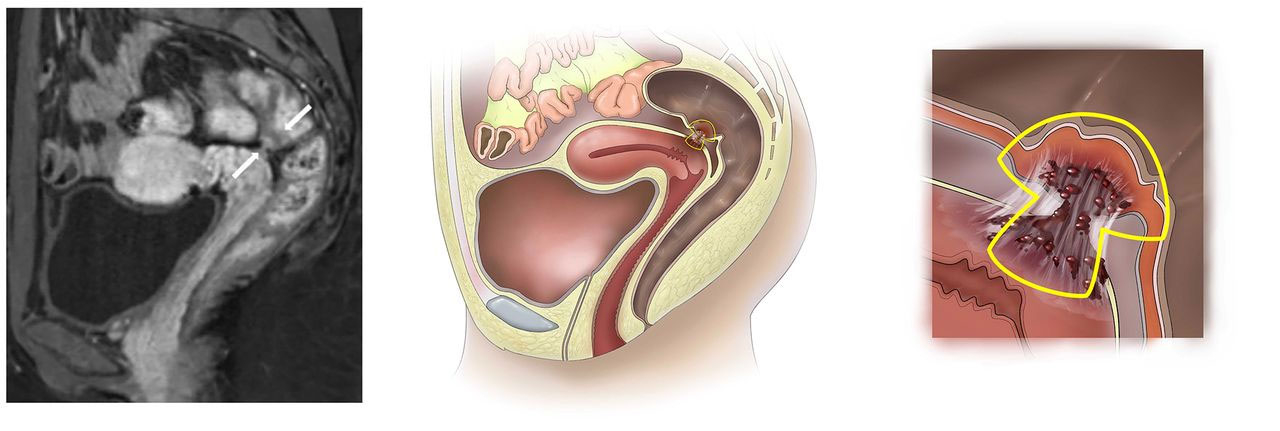
Deep Infiltrating Endometriosis (DIE) is a severe and complex form of endometriosis in which endometrial-like tissue penetrates more than 5 mm beneath the surface of pelvic organs. This condition commonly affects areas such as the bowel, bladder, uterosacral ligaments, rectovaginal septum, and pelvic nerves, leading to significant pain and functional problems.
Unlike superficial endometriosis, DIE tends to be progressive and more aggressive, often causing dense fibrosis, adhesions, and distortion of pelvic anatomy. Because symptoms may be severe yet imaging findings subtle, diagnosis requires specialized expertise and a high index of clinical suspicion.
Symptoms depend on the organs involved and often worsen during menstruation. Many women experience long-standing pain that significantly affects daily life, work, and emotional well-being.
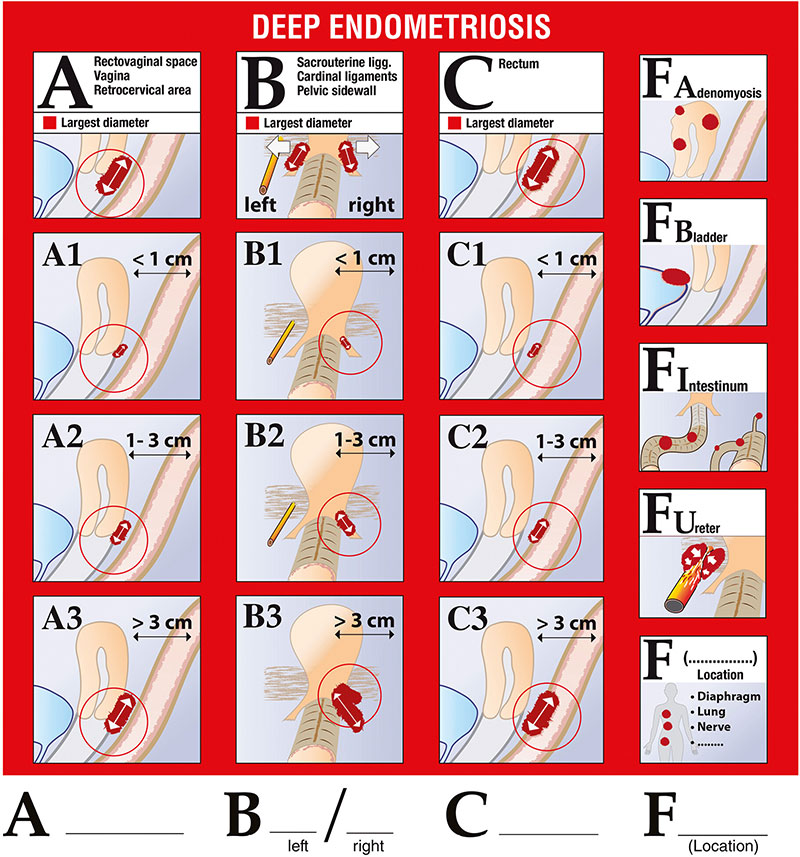
Accurate diagnosis of DIE requires a combination of clinical evaluation and advanced imaging. Early identification helps prevent disease progression and improves surgical outcomes.
Treatment is individualized based on symptom severity, organ involvement, and fertility goals. While medical therapy may provide temporary relief, surgery remains the definitive treatment for advanced DIE.
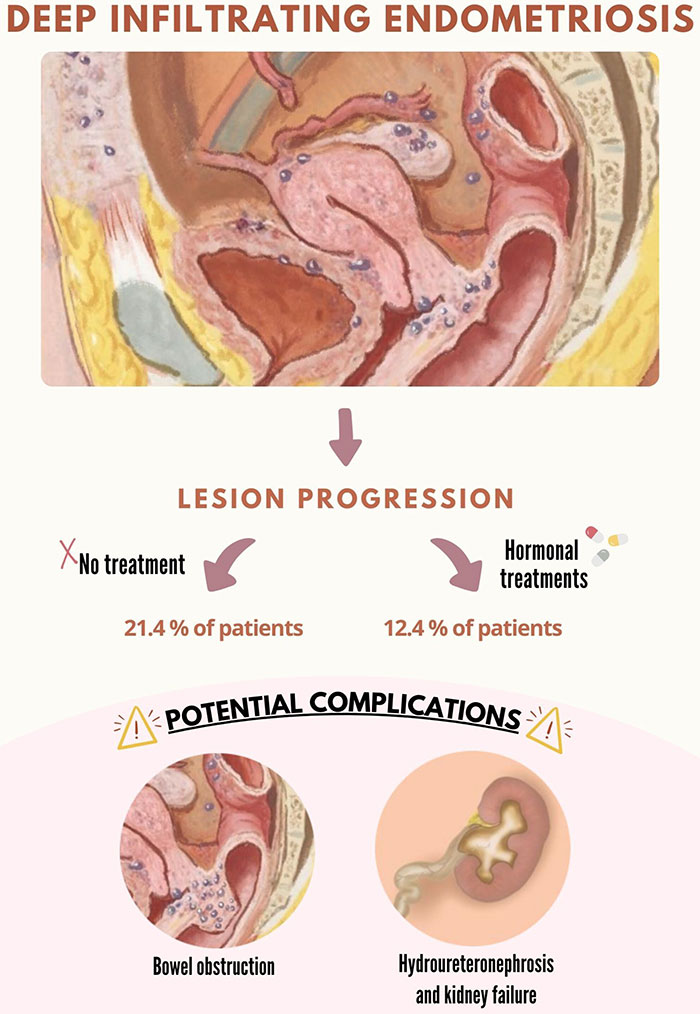
Advanced minimally invasive surgery allows precise excision of disease while preserving healthy tissue. When performed by an experienced surgeon, this approach offers excellent pain relief, low recurrence rates, and improved reproductive outcomes.
Deep infiltrating endometriosis can be physically and emotionally challenging, but effective treatment is possible with timely diagnosis and specialized surgical care. A comprehensive, patient-centered approach helps women regain comfort, function, and confidence in their long-term health.