
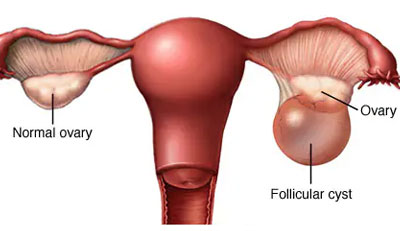
An ovarian cyst is a fluid-filled sac that develops within or on the surface of the ovary. While many cysts are harmless and resolve on their own, some can grow larger, cause pain, or affect fertility. In certain cases—such as persistent, complex, or symptomatic cysts—medical evaluation and treatment become essential. With advanced imaging and minimally invasive surgical options, ovarian cysts can be managed safely and effectively.
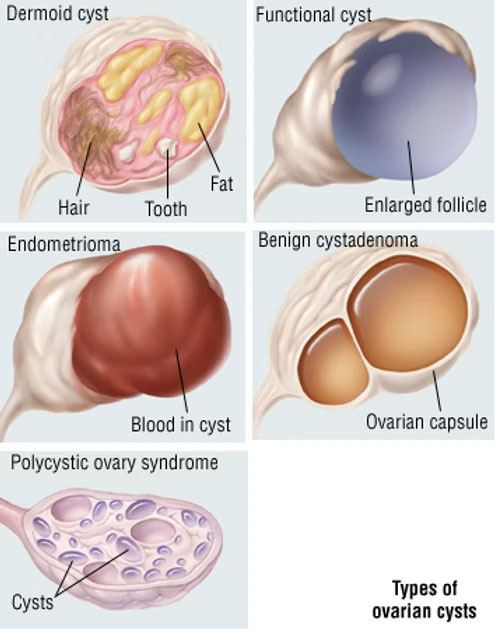
Ovarian cysts may cause no symptoms at all, but when they do, women often report pelvic pain, bloating, irregular periods, or discomfort during intercourse. Timely assessment helps differentiate between functional (normal) cysts and those requiring treatment such as endometriomas, dermoid cysts, or cysts that risk twisting (ovarian torsion). Early diagnosis can also protect ovarian reserve and fertility.
Diagnosis typically involves a pelvic ultrasound—often the first and most reliable test. Additional imaging or blood tests may be advised based on the type of cyst. In women with persistent symptoms, recurrent cysts, or fertility concerns, a detailed evaluation ensures the best treatment approach.
Not all cysts are the same, and understanding their type helps determine the right course of action.
Most ovarian cysts can be treated using minimally invasive surgery. Laparoscopic cyst removal not only provides excellent cosmetic results but also helps preserve normal ovarian tissue, which is crucial for women planning future pregnancies.
Treatment is customized based on the size, type, symptoms, and impact on fertility.
Laparoscopic surgery offers major advantages such as clearer visualization, precise removal, minimal damage to healthy ovarian tissue, and a faster recovery compared to open procedures. This makes it the preferred method for most symptomatic or complex cysts.
With timely diagnosis and expert care, most ovarian cysts can be managed safely while protecting reproductive health. The goal of treatment is to relieve symptoms, preserve ovarian function, prevent complications, and support a woman’s long-term well-being.