
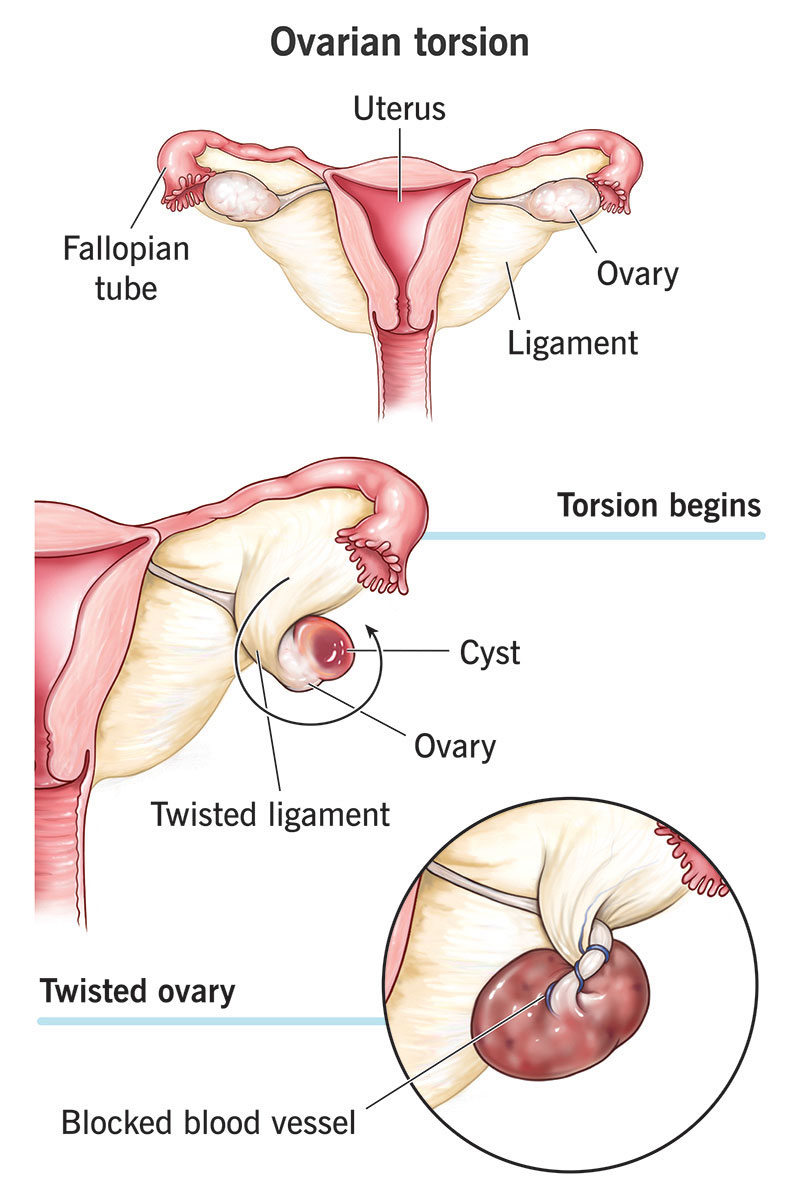
Ovarian torsion is a sudden, painful condition in which an ovary twists around the ligaments that support it. This twist disrupts blood flow to the ovary and fallopian tube, leading to severe pelvic pain and requiring immediate medical attention. It most often occurs when an ovary becomes enlarged due to a cyst, dermoid, or other growth. With prompt diagnosis and timely laparoscopic treatment, the ovary can often be saved and long-term complications can be prevented.
Because ovarian torsion develops rapidly and presents as an emergency, recognizing the symptoms early is crucial. The pain is usually sudden, sharp, and located on one side of the lower abdomen. Women may also experience nausea, vomiting, or difficulty standing upright. Early evaluation allows the surgeon to untwist the ovary and preserve its function, which is especially important for women who wish to maintain fertility.
Diagnosis is made through a combination of clinical examination and imaging—primarily pelvic ultrasound with Doppler flow studies. While imaging helps identify enlarged ovaries or cysts, final confirmation is usually made during laparoscopy, which allows direct visualization and immediate treatment.
Ovarian torsion is a time-sensitive condition. The longer the ovary remains twisted, the greater the risk of tissue damage due to reduced blood supply. Quick surgical intervention helps restore blood flow and preserve ovarian function.
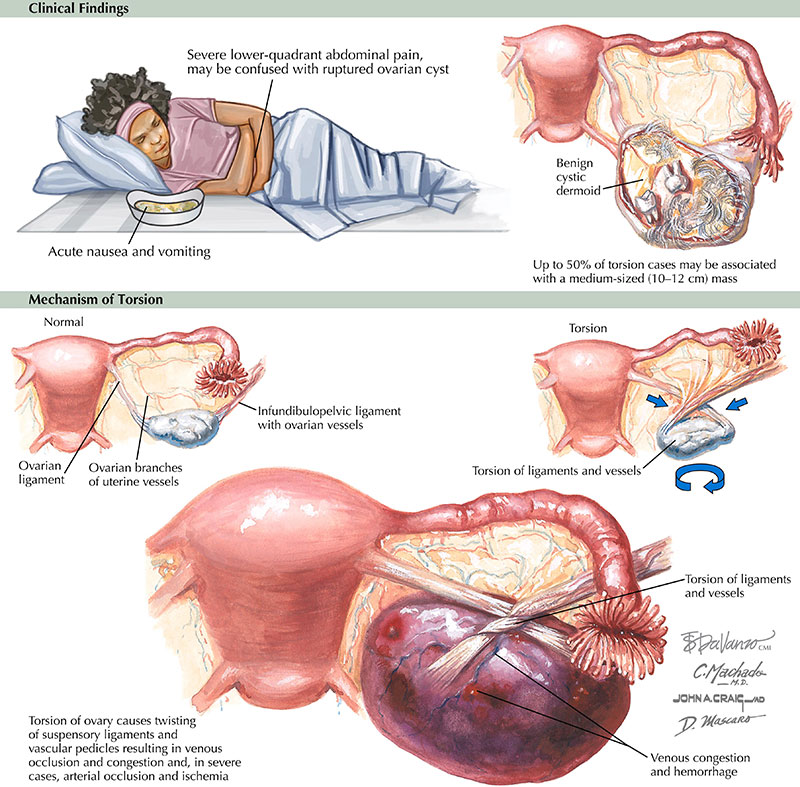
Laparoscopic surgery is the preferred treatment for ovarian torsion. Through tiny incisions, the surgeon carefully untwists the ovary and assesses its viability. If a cyst or dermoid is causing the torsion, it is removed in the same procedure. Most women recover quickly with minimally invasive techniques, experiencing less pain and returning to routine activities sooner.
Treatment aims to save the ovary whenever possible while addressing the underlying cause.
Fortunately, in most women, especially when treated early, the ovary regains normal function after detorsion. Preserving fertility and ovarian health remains a top priority in all treatment decisions.
Ovarian torsion can be frightening, but with timely diagnosis and expert laparoscopic care, most women recover fully and maintain normal ovarian function. Early medical attention is key to preventing complications and ensuring the best possible outcome.