
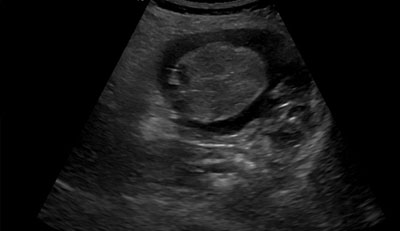
A dermoid cyst, also known as a mature cystic teratoma, is a type of benign ovarian tumor that contains tissues such as hair, fat, or skin. These cysts typically grow slowly, but they may become large, cause discomfort, or lead to complications such as ovarian torsion. Although dermoid cysts are non-cancerous, they usually require surgical removal to prevent future problems. Modern minimally invasive techniques allow safe and effective removal while preserving healthy ovarian tissue.
Many women with dermoid cysts do not experience noticeable symptoms. When symptoms do occur, they may be due to the size or weight of the cyst. Larger cysts can cause pelvic pressure, abdominal pain, or irregular periods. In some cases, the cyst may twist on its stalk, leading to sudden severe pain—this is a medical emergency known as ovarian torsion.
Diagnosis is usually confirmed through a pelvic ultrasound, which clearly shows the characteristic appearance of a dermoid cyst. In some cases, an MRI may be recommended to assess the size, type, and exact location of the cyst. Early evaluation is essential to prevent complications and ensure timely treatment.
Unlike functional cysts, dermoid cysts do not shrink on their own. They may continue to grow or twist, making surgical removal the preferred approach—especially for symptomatic or large cysts.
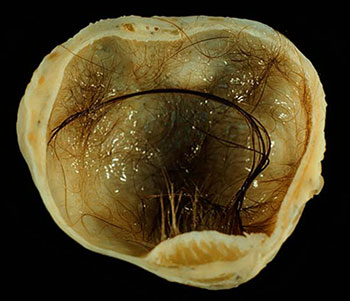
Laparoscopic cystectomy is the recommended method for removing dermoid cysts. This minimally invasive approach uses tiny incisions and advanced instruments to safely remove the cyst while keeping the ovary intact. It offers faster healing, less pain, and an excellent cosmetic result compared to open surgery.
Treatment is individualized based on the cyst’s size, symptoms, and impact on fertility.
Laparoscopic removal minimizes trauma to the ovary and provides the best chance of fertility preservation. Surgeons take special care to prevent spillage and ensure complete removal to avoid recurrence.
With accurate diagnosis and expert surgical care, dermoid cysts can be treated effectively while ensuring the health and function of the ovaries. Minimally invasive techniques offer the best outcomes, helping women return to their routine with confidence and peace of mind.